
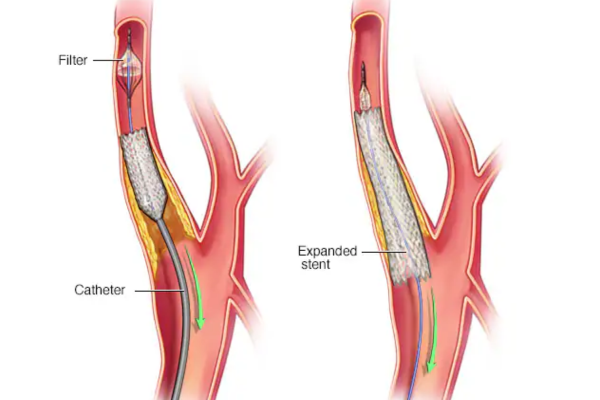
Carotid and vertebral artery stenting is a minimally invasive procedure used to treat narrowing of arteries supplying blood to the brain. Such narrowing reduces blood flow and significantly increases the risk of stroke and transient ischemic attacks.
A stent is placed inside the narrowed artery using catheters to widen it and restore circulation. This improves cerebral blood flow, reduces stroke risk, and avoids open surgery.
Artery stenting is recommended when reduced blood flow causes warning neurological symptoms or when imaging shows significant narrowing. Early intervention prevents major stroke. Timely stenting restores circulation, stabilizes symptoms, and protects brain function by reducing clot formation and embolic events associated with arterial stenosis.
Carotid and vertebral artery stenting restores blood flow to the brain, significantly reducing stroke risk. It prevents clot formation, improves neurological stability, and preserves brain function. As a minimally invasive procedure, it avoids open surgery, shortens recovery time, reduces complications, and offers effective long-term protection against recurrent cerebrovascular events.
To restore blood flow and reduce stroke risk.
Yes, especially in high-risk surgical patients.
Yes, stents are designed for permanent support.
Copyright © 2026 Dr. K S V Surya Teja Reddy – All Rights Reserved by Galaxy Tech Solutions